This post contains affiliate links. I may earn a commission at no extra cost to you.
The brick and the door
Almost everyone knows bones need calcium. Far fewer know that calcium arriving in the gut does not necessarily reach the bones.
Vitamin D is what makes the absorption happen. It allows the intestine to take calcium up and pass it into the bloodstream. Without enough of it, a proportion of the calcium you eat — or swallow as a tablet — simply continues on its way and leaves.
Which produces a frustrating and very common situation: someone takes calcium faithfully for years, is low in vitamin D without knowing it, and gets a fraction of the benefit they paid for.
Calcium is the brick. Vitamin D is the door. Buying more bricks does not help if the door is shut.
Why vitamin D gets harder with age
Most vitamin D does not come from food. It is manufactured in the skin, using ultraviolet light from the sun.
Three things work against that after 60.
Skin becomes less efficient at producing it. Given identical sun exposure, older skin generates substantially less vitamin D than younger skin. Same garden, same hour, less result.
Time outdoors usually falls. Retirement, reduced mobility, cold weather, sensible caution about sun exposure — the hours add up differently than they did.
Latitude and season matter more than people realise. In much of northern Europe and the northern United States, the sun sits too low for several winter months for the skin to make any vitamin D at all, regardless of how long you stand in it.
And the symptoms of running low are almost perfectly disguised: tiredness, aching legs and lower back, and weakness in the thigh muscles that shows up as difficulty on stairs or getting out of a chair. Every one of those gets attributed to age.
Where it comes from
Food covers calcium well and vitamin D poorly
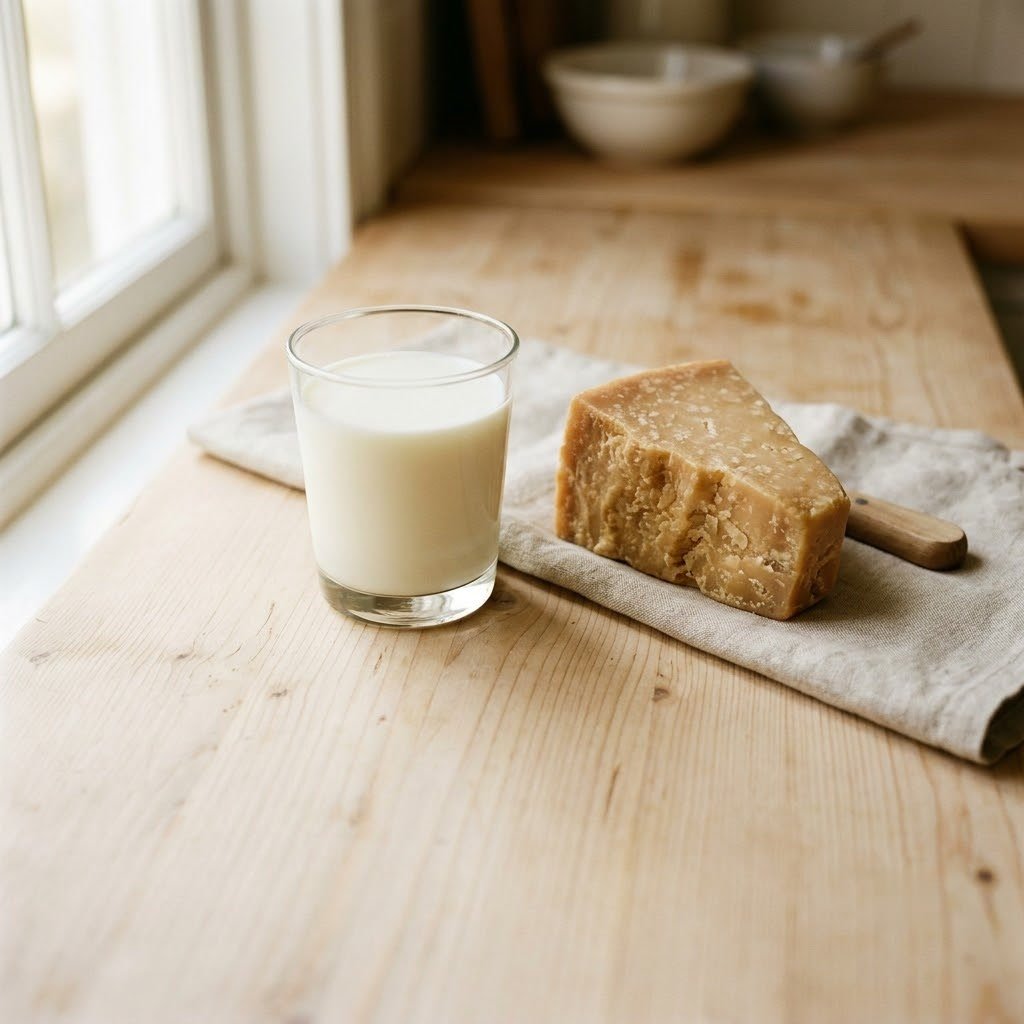
Dairy
Milk, cheese and yoghurt remain the most concentrated and most convenient everyday calcium sources, and the calcium in them is well absorbed.
How to eat it: If a smaller appetite makes another plate of food difficult, liquid sources are easier. Milk on porridge counts.
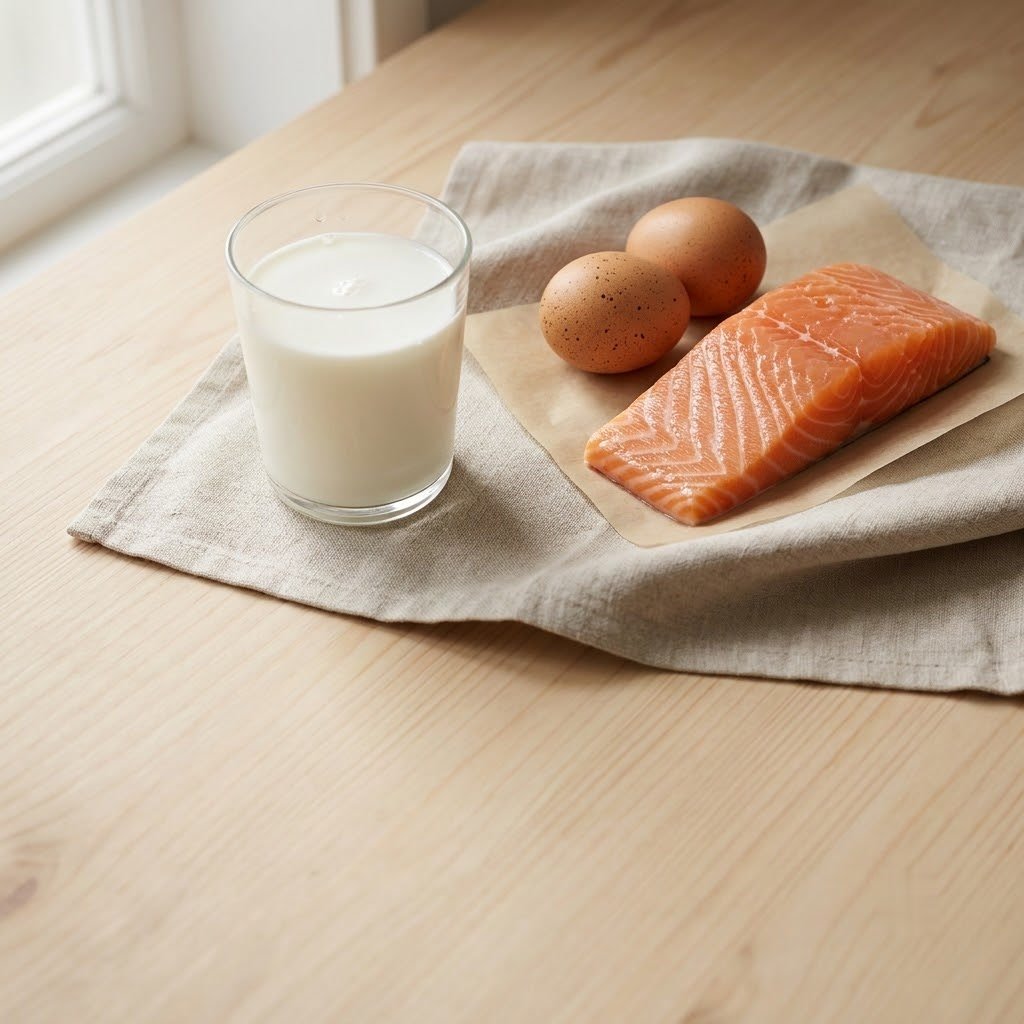
Tinned fish with the bones in
Tinned sardines and tinned salmon contain soft, edible bones — which makes them one of the few foods supplying meaningful calcium and vitamin D together.
How to eat it: Mash them with a fork and the bones disappear entirely into the texture. This is the closest thing to a single food that covers both.
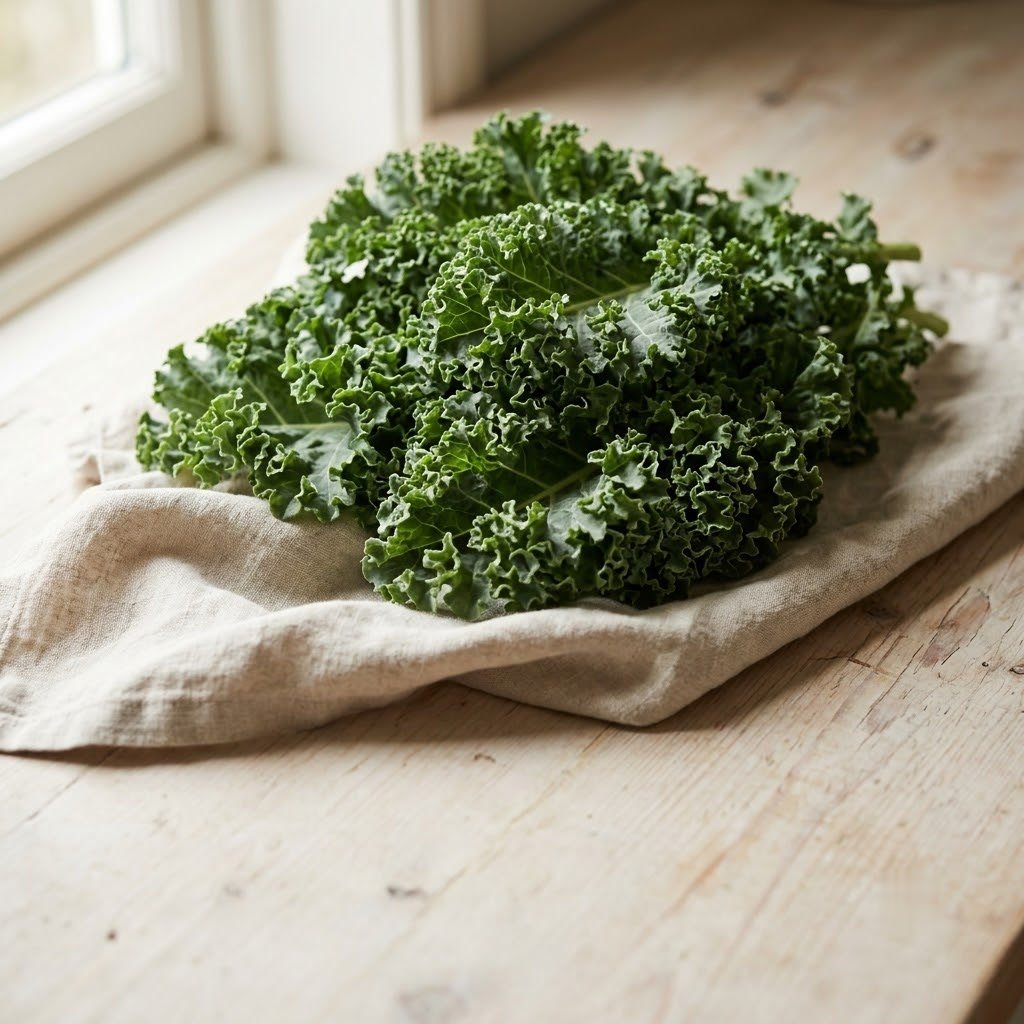
Greens, and fortified foods
Kale, broccoli and tinned beans contribute usefully, particularly for anyone avoiding dairy. Many plant milks and cereals are fortified with both calcium and vitamin D.
How to eat it: Fortification is not universal. Some plant milks are fortified and some are not, and only the back of the carton tells you.
Spinach contains calcium but also compounds that bind it, so less is absorbed than the number suggests. Kale and broccoli are the better choices for this particular job.
The honest summary: food handles calcium reasonably well and vitamin D badly. Very few foods contain much vitamin D naturally. That is why this is one of the few supplements that is widely and sensibly recommended — but it is also why the test comes first.
Why the test comes before the bottle
Vitamin D is fat-soluble, which means the body stores it rather than clearing the surplus. That changes the arithmetic compared with a vitamin you simply pass out.
It means too much is possible, and excess vitamin D causes calcium to build up in the blood, which is genuinely harmful. It is not common, and it generally requires large doses taken for a long time — but the high-strength products on the shelf make it more achievable than it used to be.
So “take plenty, it can’t hurt” is not right for this one.
A blood test tells you where you actually stand, and then the dose is chosen for your number rather than guessed from a shelf. If you have been tired with aching legs and have never been tested, it is a very reasonable thing to ask for — particularly alongside B12, since the two produce overlapping symptoms and both get blamed on age.
A note on calcium supplements specifically: current thinking is generally to get calcium from food where possible and reserve supplements for people who genuinely cannot. If you have been prescribed one, take it as prescribed. If you are considering one off your own bat, that is worth a conversation rather than a purchase.
The part no capsule does
Bone is living tissue. It is constantly being broken down and rebuilt, and it responds to the demands placed on it — bone that is loaded is maintained, bone that is not is gradually given up.
This is why weight-bearing activity matters so much, and why it is not interchangeable with nutrition:
- Walking — the load of your own body through your legs and hips, most days
- Standing up from a chair without using your hands, ten times a day
- Carrying the shopping rather than making two light trips
- Stairs, when there are stairs
Swimming and cycling are excellent for the heart but do far less for bone, because the load is taken off the skeleton. Both are worth doing. Neither replaces walking.
And there is a second reason to bother, which matters more than bone density itself: strength and balance decide whether you fall in the first place. The strongest bones in the world still break if you land hard enough. The ten-second balance test is here, and muscle is built from protein you actually spread across the day.
Who this is for
This is for you if
- You are over 60 and want to look after your bones sensibly
- You have been tired with aching legs and have never had vitamin D checked
- You spend most of your time indoors, or cover up outdoors
- You have been told you have thinning bones and want to understand what helps
Skip this if
- You have kidney stones, kidney disease or a parathyroid condition — calcium and vitamin D advice is different for you
- You take digoxin or certain other medicines affected by calcium levels — ask your pharmacist first
- You are planning to take a high-dose vitamin D product without a test — that is the one where more is genuinely not better
The short version
Calcium without vitamin D is bricks without a door.
Get the test before the bottle, because vitamin D is stored rather than cleared and the right dose depends on your number.
Eat the tinned fish with the bones in — it is the one food that covers both at once.
Then walk, most days, because bone only keeps what it is asked to carry.
One short email a week. Plain English, one thing worth eating, one thing worth asking about. No miracle cures.
Medical disclaimer. This site does not provide medical advice. Information here is for general education only. Consult your doctor or pharmacist before starting any supplement, especially if you take prescription medicine.