This post contains affiliate links. I may earn a commission at no extra cost to you.
This post contains affiliate links. I may earn a commission at no extra cost to you.
Balance is something you can train
Many people assume that wobbliness is simply what happens with age and that nothing can be done. In fact, balance depends on the eyes, the inner ear, the nerves in the feet and the strength of the legs, and several of those respond well to practice.
That is why falls prevention advice so often includes movement, not just safer furniture. Our guide to preventing falls at home covers the house; this piece covers the body.
Before you start
– Stand next to a sturdy worktop or the back of a heavy chair so you can hold on. – Clear the floor of rugs and clutter. – Wear shoes with a grip, or go barefoot on a non-slip surface, not socks on a polished floor. – Stop if you feel dizzy, sharp pain or breathless, and sit down. – If you have had a recent fall, feel dizzy often, or have a heart or joint condition, ask your doctor or physiotherapist what is suitable for you.
Five simple practices
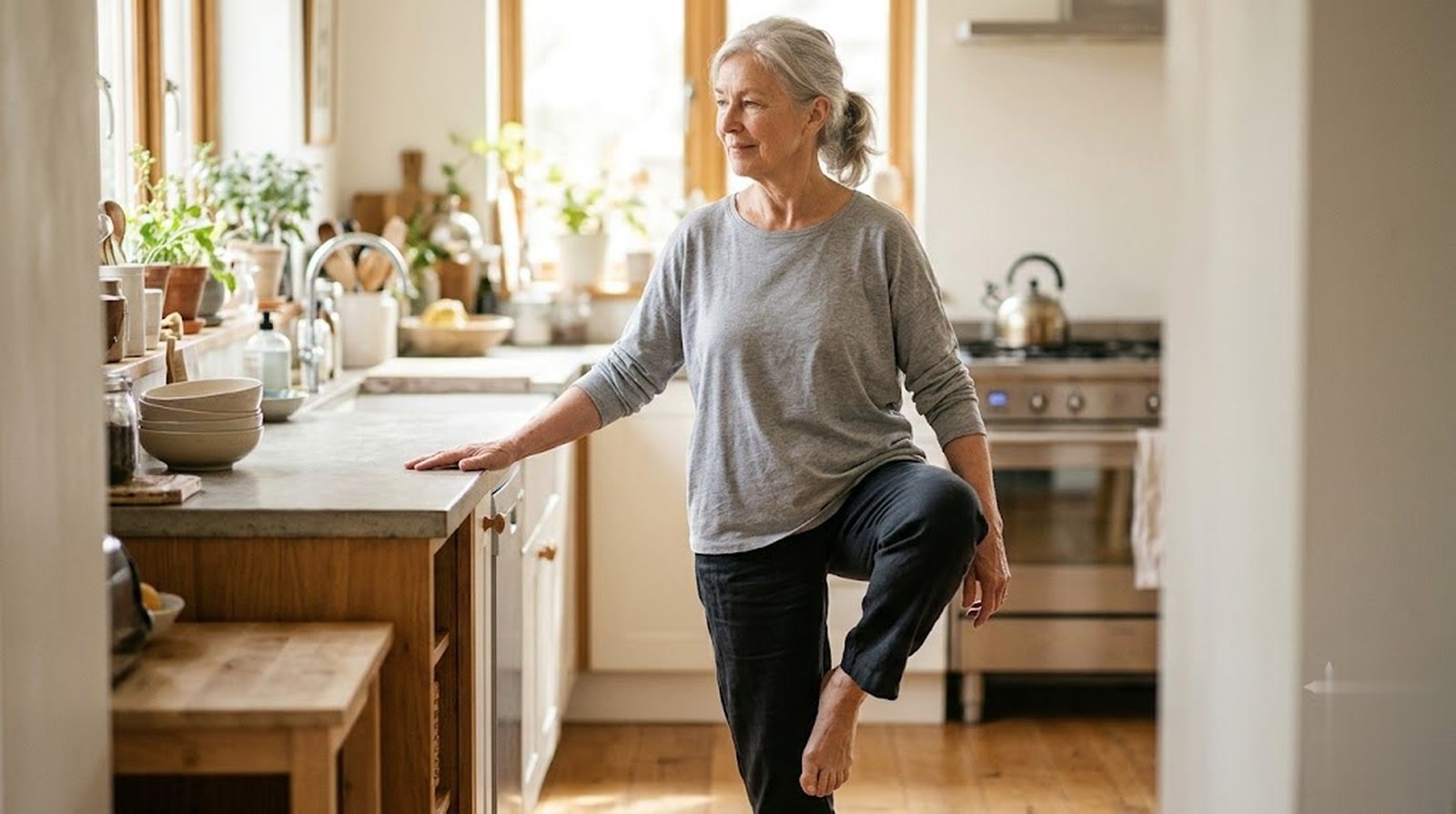
Stand on one leg. Hold the worktop with one hand and lift one foot a little. Aim for a few seconds, then swap. Add time slowly over the weeks.
Heel-to-toe walking. Walk along a clear stretch of worktop placing the heel of one foot directly in front of the toes of the other, as if on a line. Keep a hand close to the surface.
Sit to stand. From a firm chair, stand up without using your hands if you can, then sit down slowly. This builds the leg strength that steadies you.
Weight shifts. With feet hip-width apart, slowly transfer your weight from one foot to the other, holding on lightly.
Walk every day. Ordinary walking on even ground, at a pace that feels comfortable, keeps the legs and the balance system working.
Do a few minutes most days, rather than one long session once a week.
Ask about classes
Local health services and community centres often run balance or strength classes for older adults, led by trained instructors. They provide supervision, a routine and company, which makes them easier to stick with than exercises alone. Your doctor or practice nurse can usually point you to one.
Stiffness and balance
If your joints feel stiff first thing in the morning, a little gentle warming up helps before any balance practice. See what morning stiffness means for the common causes and when to mention it.
Summary
Balance can improve with simple, regular practice beside something to hold. Start small, go slowly, keep it safe, and ask about classes or professional advice if you have had falls or other conditions.
This article is general information, not medical advice. Check with your doctor or physiotherapist
before starting any new exercise.
Medical disclaimer. This site does not provide medical advice. Information here is for general education only. Consult your doctor or pharmacist before starting any supplement, especially if you take prescription medicine.