
This post contains affiliate links. I may earn a commission at no extra cost to you.
One reading tells you almost nothing
Blood pressure is not a fixed property like your height. It changes minute to minute — with posture, temperature, conversation, a flight of stairs, a difficult phone call, how long ago you had coffee.
Which means a single number captured at one moment is a snapshot of that moment, not of you.
People buy a monitor, take one reading, see something alarming, and spend the evening worrying about a figure that would have been quite different twenty minutes later. Others take one good reading and conclude everything is fine.
What a doctor actually wants is a pattern — several readings, taken consistently, over about a week. That is the thing that means something, and producing it properly is a skill worth ten minutes of your attention.
The seven things that change the number
Crossed legs. Crossing your legs at the knee raises the reading. Both feet flat on the floor.
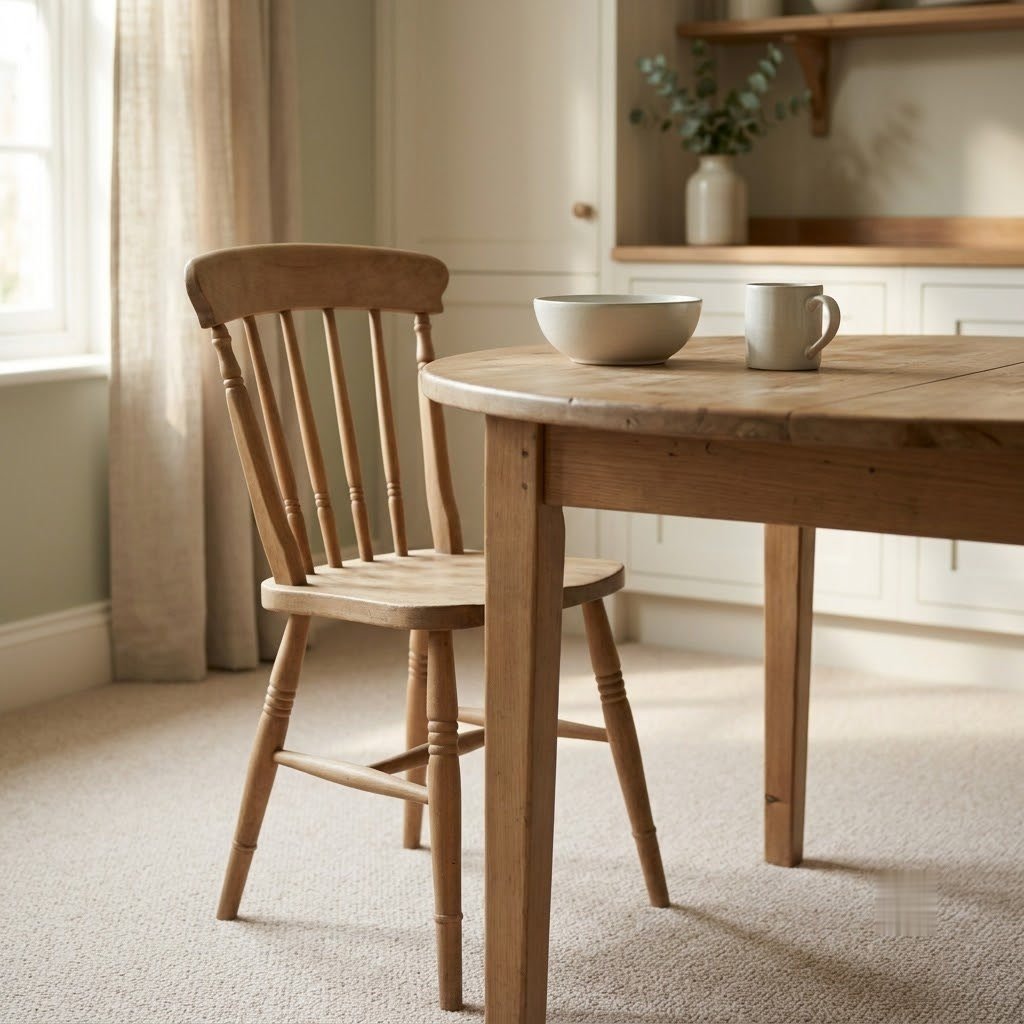
An unsupported arm. If you hold your arm up yourself, the muscle work raises the reading. If it hangs by your side, the height relative to your heart changes it too. Rest the arm on a table so the cuff sits level with your heart.
A full bladder. It raises blood pressure measurably. Go first.
Talking. Even a quiet conversation during the measurement pushes the number up. So does listening and answering. Silence for the whole reading, including the person next to you.
A cuff over a sleeve. The cuff must go on bare skin. A rolled-up sleeve bunched above the cuff is worse again, because it acts like a tourniquet.
Caffeine, food and cigarettes in the previous half hour. All of them move it. Wait.
No rest beforehand. Walking in from the garden and immediately measuring gives you the garden’s number, not yours. Sit quietly for five minutes first — properly five, not a rushed one.
Any one of these can change the result by enough to matter. Two or three together can turn a normal reading into a worrying one, or hide a real problem.
The cuff is the commonest equipment mistake
This one costs money to get wrong and almost nobody checks it.
If the cuff is too small for your arm, it has to inflate harder to compress the artery underneath, and the monitor reports a higher pressure than is really there. Too large a cuff reads low. Neither error is small.
Most monitors ship with a standard cuff sized for an average arm. If your upper arm is larger than average, you need a large cuff, and it is usually sold separately.
Measure around the middle of your upper arm with a tape measure, then check that measurement against the range printed on the cuff itself — every cuff has one, usually near the edge. If your arm sits outside that range, the machine cannot give you a correct reading no matter how carefully you sit.
And one more: use an upper-arm monitor, not a wrist one. Wrist monitors are far more sensitive to the position of your hand relative to your heart, and small errors produce large differences. Unless your doctor has specifically recommended a wrist device for a reason, the upper arm is the one to buy.
The routine that produces a real number
1. Empty your bladder. 2. Sit in an ordinary dining chair — back supported, both feet flat, legs uncrossed. 3. Rest the arm on the table, cuff level with the heart, on bare skin. 4. Sit quietly for five minutes. No phone, no television, no conversation. 5. Take the reading without speaking. 6. Wait one minute, take a second reading. If the two differ a lot, take a third. 7. Write down the numbers, the date and the time.
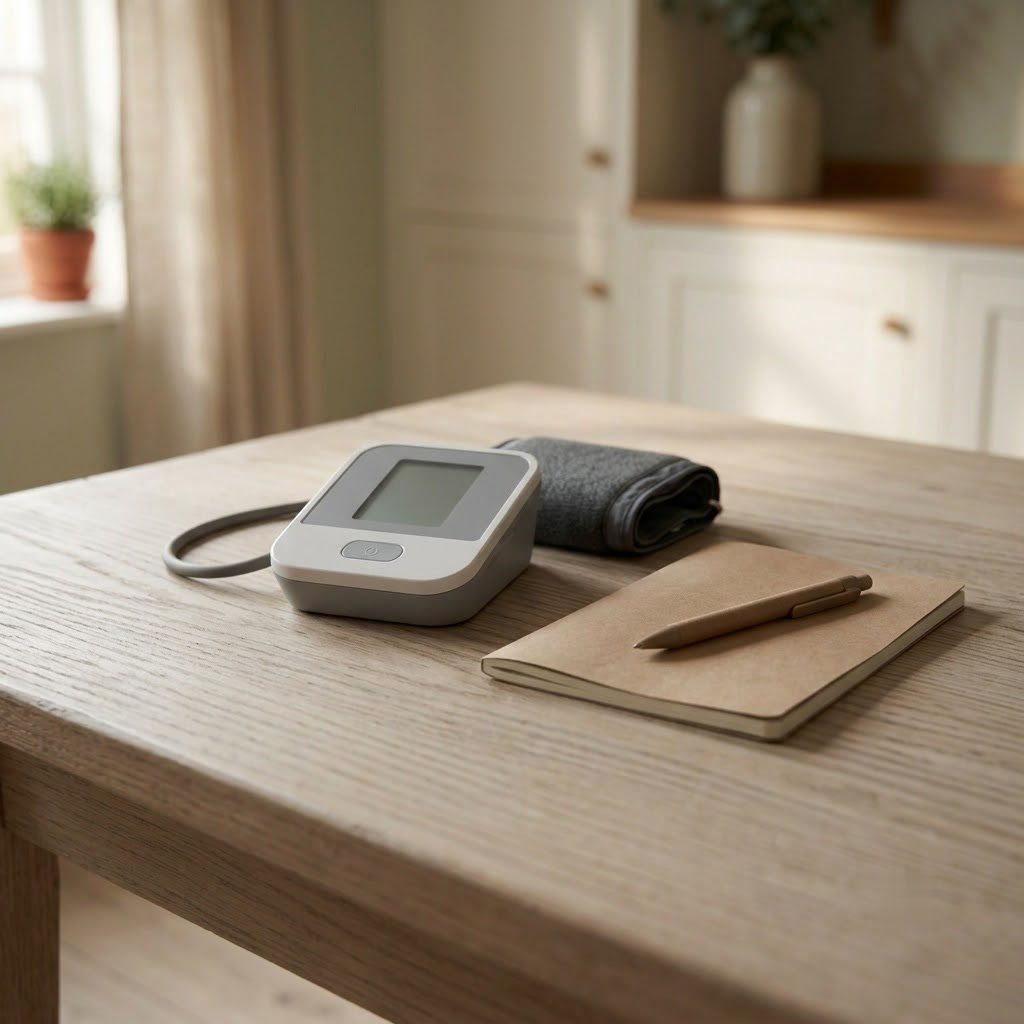
Do that twice a day — morning before breakfast and any medication, and evening — for seven days.
That sheet of paper is worth more to your doctor than a monitor full of readings taken however they happened to be taken, and it is worth far more than one dramatic number remembered from a bad afternoon.
Two patterns worth knowing about
Higher at the surgery than at home. Common enough to have a name — white coat hypertension. Being in a clinical setting genuinely raises some people’s blood pressure. This is one of the main reasons home readings are useful at all.
Higher at home than at the surgery. Less well known, and more important, because it can be missed entirely. Someone whose readings look fine in the consulting room may have raised pressure the rest of the time. A home record is the only way that shows up.
Both of these are reasons to bring your sheet, rather than reasons to argue with the machine.
When not to wait
Home monitoring is for tracking a pattern over time. It is not for diagnosing an emergency.
If you have a very high reading together with chest pain, breathlessness, severe headache, visual changes, weakness on one side or difficulty speaking, that is not a monitoring question. That is an ambulance.
Do not repeat the reading until it improves and then go to bed.
Who this is for
This is for you if
- You have been asked to monitor at home and want the readings to be worth something
- You bought a monitor and get wildly different numbers each time
- Your readings at home and at the surgery disagree
Skip this if
- You are having symptoms right now — that is not a monitoring question, get help
- You are adjusting your own medication based on home readings — that decision belongs with your doctor
The short version
Bladder empty, feet flat, arm supported, sleeve off, mouth shut, five minutes of sitting still.
Twice a day for a week, written down.
Then, once you have a number you can trust, the food side of it is worth doing properly — starting with the potassium half of the story and where the salt is actually coming from.
One short email a week. Plain English, one thing worth doing, one thing worth asking about. No miracle cures.
Medical disclaimer. This site does not provide medical advice. Information here is for general education only. Consult your doctor or pharmacist before starting any supplement, especially if you take prescription medicine.