This post contains affiliate links. I may earn a commission at no extra cost to you.
Where the carrot story came from
The carrot story is one of the most successful pieces of wartime messaging ever produced.
During the Second World War, Britain had developed radar and did not want to advertise it. The cover story put out was that RAF night pilots were eating a great many carrots and seeing remarkably well in the dark. The public believed it. Eighty years later, the public still believes it.
There is a grain of truth underneath. Carrots contain beta-carotene, which the body converts into vitamin A, and vitamin A really is essential for vision — genuine deficiency causes night blindness and, in severe cases, permanent damage. It remains a serious problem in parts of the world where food is scarce.
But if you are reading this in a country with well-stocked supermarkets, you are very unlikely to be short of vitamin A. Eating more carrots when you already have enough does not improve your sight any further. It is a floor, not a ladder.
The things that actually matter for ageing eyes are two pigments almost nobody has heard of.
Lutein and zeaxanthin, and why they are different
Most nutrients circulate and get used wherever they are needed.
These two do something unusual: the body actively transports them to one specific place and concentrates them there. That place is the macula — the small central region of the retina you use for reading, recognising faces and seeing detail. The concentration is dense enough to be visible as a yellow pigment, which is why that area is called the macula lutea, the yellow spot.
There, the pigments appear to do two jobs. They absorb high-energy blue light before it reaches the delicate cells behind, and they act as antioxidants in tissue that works extremely hard and is exposed to a great deal of light.
Your body cannot manufacture either of them. Every molecule in your macula arrived there from something you ate.
That is what makes this different from most diet advice. It is not a vague claim about general wellbeing — it is a specific pigment ending up in a specific structure, and the only route in is the plate.
Where they come from
The list is short and cheap
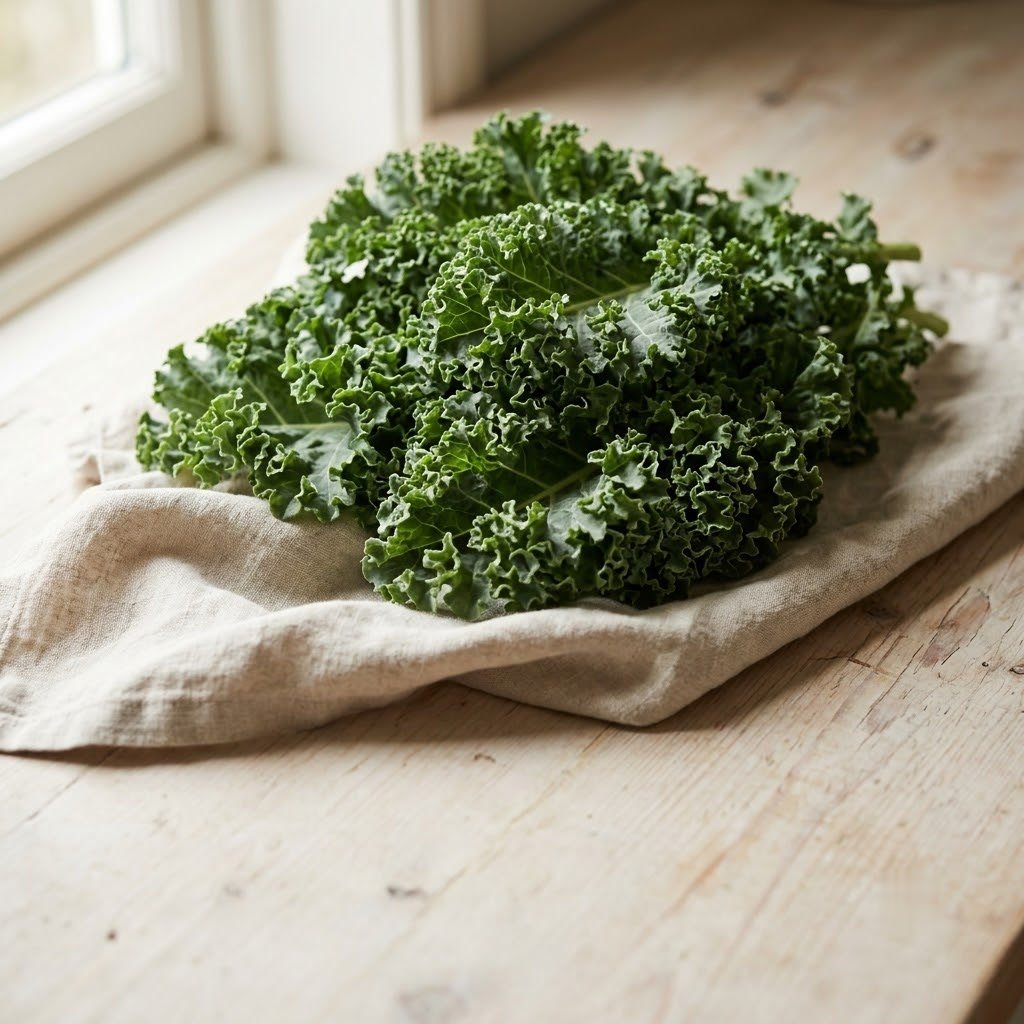
Dark leafy greens
Kale, spinach and collards are by a wide margin the richest everyday sources of both pigments. Nothing else in an ordinary shop comes close on quantity.
How to eat it: Cooked concentrates them and makes a real portion far easier to eat — a whole bag of spinach wilts into a couple of spoonfuls. Cook it with a little olive oil and you have solved two problems at once.
On warfarin? Greens are high in vitamin K. The aim is a steady weekly amount rather than a sudden increase — mention any change to your doctor.

Egg yolks
Egg yolks contain far less lutein than kale by weight, but it arrives packaged with fat — and the body absorbs it notably better from eggs than from greens eaten on their own. Quantity is not the whole story.
How to eat it: Eat the yolk. A white-only omelette removes the entire reason this food is on the list.

Sweetcorn and peas
Both carry useful amounts of zeaxanthin specifically, and both sit in most freezers already. They are the low-effort option on a week when cooking greens is not going to happen.
How to eat it: Frozen is fine — no worse than fresh for this purpose, and considerably cheaper.
The rule that decides whether any of it works
Both pigments are fat-soluble. They cross into the body dissolved in fat, and if there is no fat in the meal, most of what you ate leaves without ever being absorbed.
This is the single most useful sentence on this page, because it is the part routinely left out — and it turns a virtuous-looking meal into a wasted one.
A plain salad of spinach and sweetcorn with a fat-free dressing delivers very little. The same salad with a spoonful of olive oil delivers substantially more. Same shopping, same plate, entirely different outcome.
In practice:
- Olive oil on the greens, not fat-free dressing
- The whole egg, not the white
- A knob of butter on the corn, without apology
- Greens alongside oily fish, rather than as a separate virtuous side
None of that is a sacrifice. It is permission.
What food cannot do
Here is where honesty matters more than enthusiasm.
Food supports the structures that are already working. It does not restore sight that has already been lost, it does not correct a refractive error, and it does not treat cataract — cataract is a clouding of the lens and the treatment for it is surgery, which is routine and very effective.
An eye examination finds things that have no symptoms at all in their early stages. Glaucoma is the obvious example: it damages peripheral vision so gradually that people frequently do not notice until a significant amount is gone. An exam also picks up signs of conditions that have nothing to do with the eyes — high blood pressure and diabetes both leave traces in the retina, sometimes before they have been diagnosed anywhere else.
So the priority order is not subtle. Book the exam first. Eat the greens as well.
If it is specifically night driving that has become uncomfortable — headlights flaring, taking longer to recover after an oncoming car — that has its own explanations, several of them ordinary and fixable. We go through them here.
Who this is for
This is for you if
- You are over 60 and want to support your eyes through ordinary food
- You have a family history of macular problems and want to do the sensible things
- You already eat greens but suspect you are not absorbing much from them
Skip this if
- Your vision has changed recently — that needs an appointment, not a shopping list
- You see flashes, floaters or a shadow across your vision — that is urgent, today, not this week
- You take warfarin and are planning a sudden large increase in leafy greens
- You are hoping to avoid cataract surgery through diet — food does not clear a clouded lens
The short version
Carrots were a cover story. Kale and egg yolks are the real answer, and they are cheap.
Put olive oil on the greens and eat the yolk, because without a little fat most of the benefit goes straight through you.
And book the exam. Food supports what you still have. An examination finds what is quietly going wrong — which is the part you cannot see coming, by definition.
If you are considering an eye supplement, there is a specific formula worth knowing about and a lot of near-copies worth avoiding — read that before you spend anything.
One short email a week. Plain English, one thing worth eating, one thing worth asking about. Nothing that promises to turn back the clock.
Medical disclaimer. This site does not provide medical advice. Information here is for general education only. Consult your doctor or pharmacist before starting any supplement, especially if you take prescription medicine.