
This post contains affiliate links. I may earn a commission at no extra cost to you.
It is not your imagination
Plenty of people quietly stop driving at night in their sixties and never tell anyone why. They arrange to be home before dark, decline evening invitations, and put it down to preferring their own fireside.
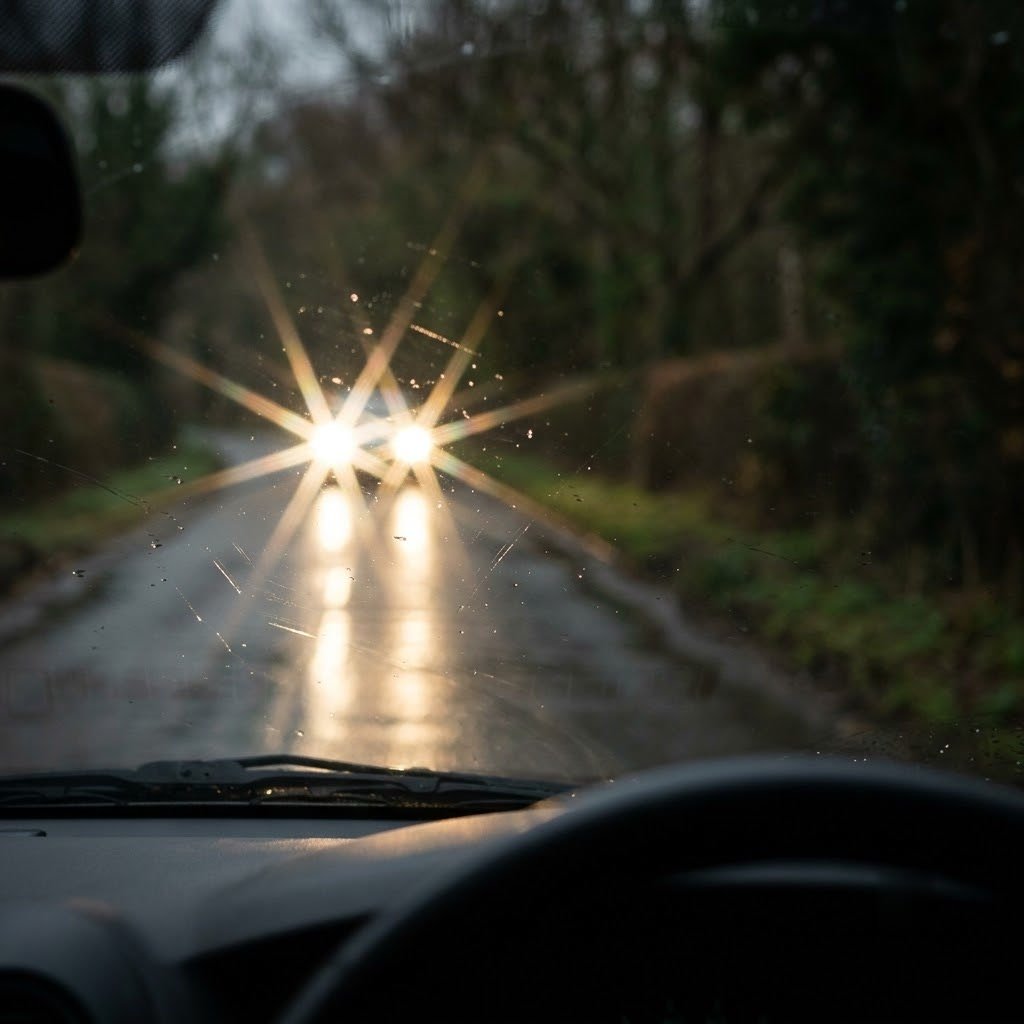
The underlying experience is real and has ordinary explanations.
Several things change. The lens of the eye becomes slightly denser and less clear with the decades, so less light gets through to the retina. The pupil does not dilate as widely as it once did, which reduces the light further. And the eye takes longer to adjust when light levels change suddenly.
Put together, a dark road genuinely is darker than it used to be, and the flare from an oncoming car takes longer to fade.
That much is ageing. Some of what people experience is not, and the difference is worth knowing.
Ordinary, versus worth checking
Ordinary ageing:
- Needing more light to read comfortably
- Taking longer to adjust when you come out of a lit garage onto a dark road
- Finding unlit country lanes harder work than they used to be
- Headlights being briefly uncomfortable as a car passes
Worth an eye examination:
- Starbursts or spokes radiating from street lights and headlights
- Halos — distinct rings around lights
- Glare that has become noticeably worse over months
- Needing markedly more light to read than you did a year ago
- Colours looking duller or yellower than they used to
- One eye clearly worse than the other
The second list points towards changes in the lens rather than just less light getting through. Cataract is the common one, and the word alarms people more than it should — it is a clouding of the lens, it develops slowly, and the treatment is one of the most routine and successful operations performed anywhere.
The point is not to worry. It is that the answer to that list is an appointment, not a product.
The yellow glasses, honestly
You will have seen them advertised: yellow or amber tinted lenses sold as “night driving glasses”, often promising to cut glare.
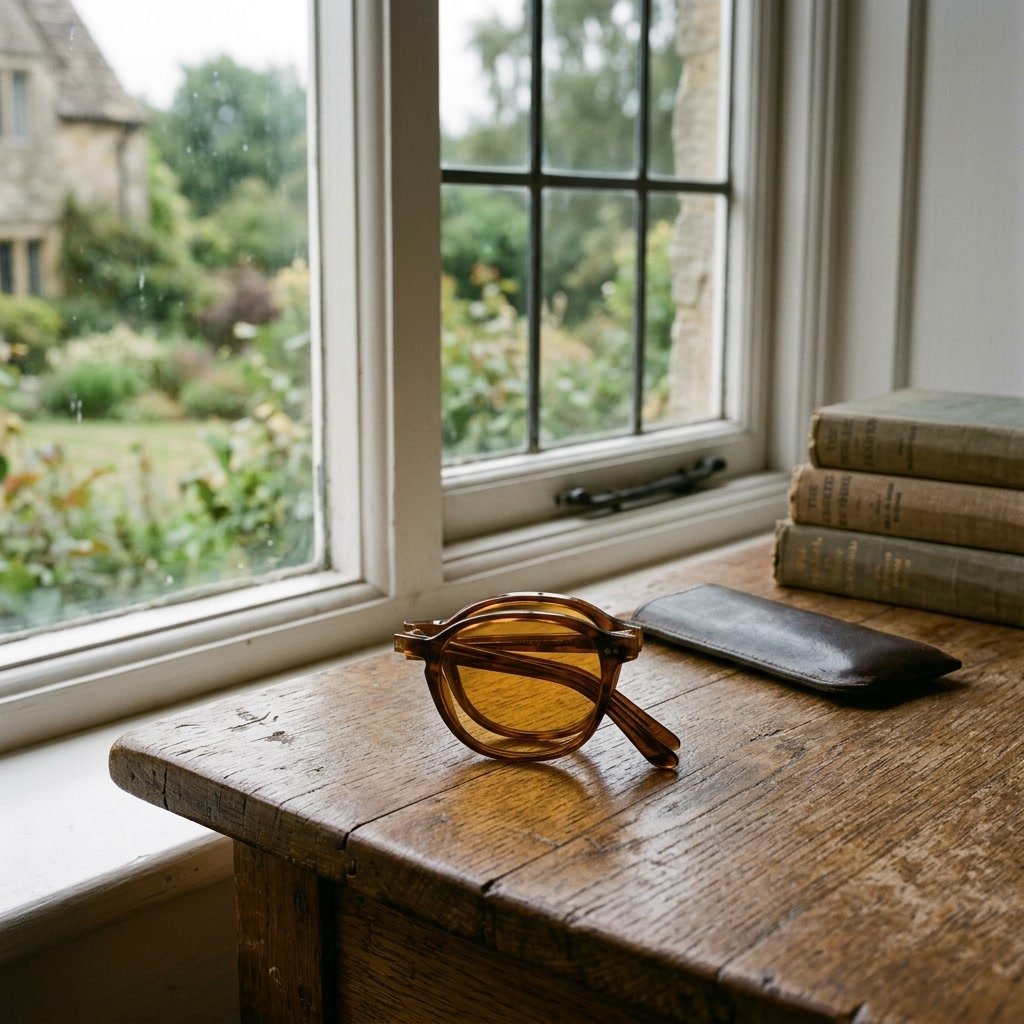
They reduce glare by reducing light. All of it.
That is exactly backwards for the problem at hand. The difficulty on a dark road is that not enough light is reaching your retina already — putting a filter in front of it makes the road, the verges, the cyclist and the pedestrian harder to see, in exchange for making the headlight a little less uncomfortable for the second it is in view.
They are popular because the subjective sensation of “less glare” is immediate and noticeable, while the cost — a darker road everywhere else — is not something you can perceive directly.
If night driving has become difficult, the useful response is an eye test, not a tint.
What genuinely helps
Clean the windscreen — both sides. This is first because it is free and because the inside is the side nobody cleans. A film of haze scatters oncoming light across the whole glass. If the windscreen is pitted from years of motorway grit, that scattering can be severe enough that replacing it transforms night driving.
Clean your glasses properly, and look at them in bright light. Fine scratches scatter light the same way a hazy windscreen does.
Ask your optician about an anti-reflective coating. On spectacle lenses it reduces internal reflections and is one of the few products here that actually addresses the mechanism. Worth asking about at your next appointment.
Dim the dashboard. A bright instrument panel keeps your eyes partly adapted to light, so the dark road looks darker. Turning it down helps more than people expect.
Look to the left edge of your lane — the verge or the white line — when a car approaches, rather than at its lights. You keep your lane position without taking the full flare.
Check your own headlights. Misaligned headlights light up the hedge and the oncoming driver rather than the road. Plastic lenses also yellow and cloud with age, and restoring or replacing them makes a real difference.
Keep your prescription current. An out-of-date prescription is mild in daylight and much more noticeable at night, when the eye has less to work with.
Deciding sensibly
There is no age at which driving at night stops being appropriate. There is a point at which it stops being comfortable, and that point deserves an honest look rather than a quiet, unexamined withdrawal.
Two questions worth answering truthfully:
- Have you had a full eye examination in the last twelve months?
- Are you avoiding night driving because it is genuinely harder, or because you had one bad experience and have not tested it since?
If the answer to the first is no, that is the next step, and it may well turn out to be fixable. A new prescription, an anti-reflective coating or a cataract operation can hand back something that was quietly being given up. And if the optician suggests a supplement, there is one formula worth knowing about and a shelf full of near-copies.
And while you are looking after your eyes generally, the pigments that concentrate in the reading part of the retina come entirely from food — which is a slower story, but a real one.
Who this is for
This is for you if
- You find night driving harder than you used to and want to know what is normal
- You have been considering yellow night driving glasses
- You have started avoiding driving after dark without having your eyes checked
Skip this if
- You see starbursts, halos or your vision has changed recently — book an examination rather than reading further
- You have sudden flashes, floaters or a shadow across your vision — that is urgent today
- You have been advised not to drive at night for a medical reason — follow that advice
The short version
Clean both sides of the windscreen tonight. It is free, it takes five minutes, and for a surprising number of people it is most of the problem.
Then book the eye test. Glare that is getting worse is information, and it usually points at something that can be dealt with.
Do not buy the yellow glasses. Less light is not the answer to not enough light.
One short email a week. Plain English, what’s worth doing and what’s worth walking past. No miracle cures.
Medical disclaimer. This site does not provide medical advice. Information here is for general education only. Consult your doctor or pharmacist before starting any supplement, especially if you take prescription medicine.